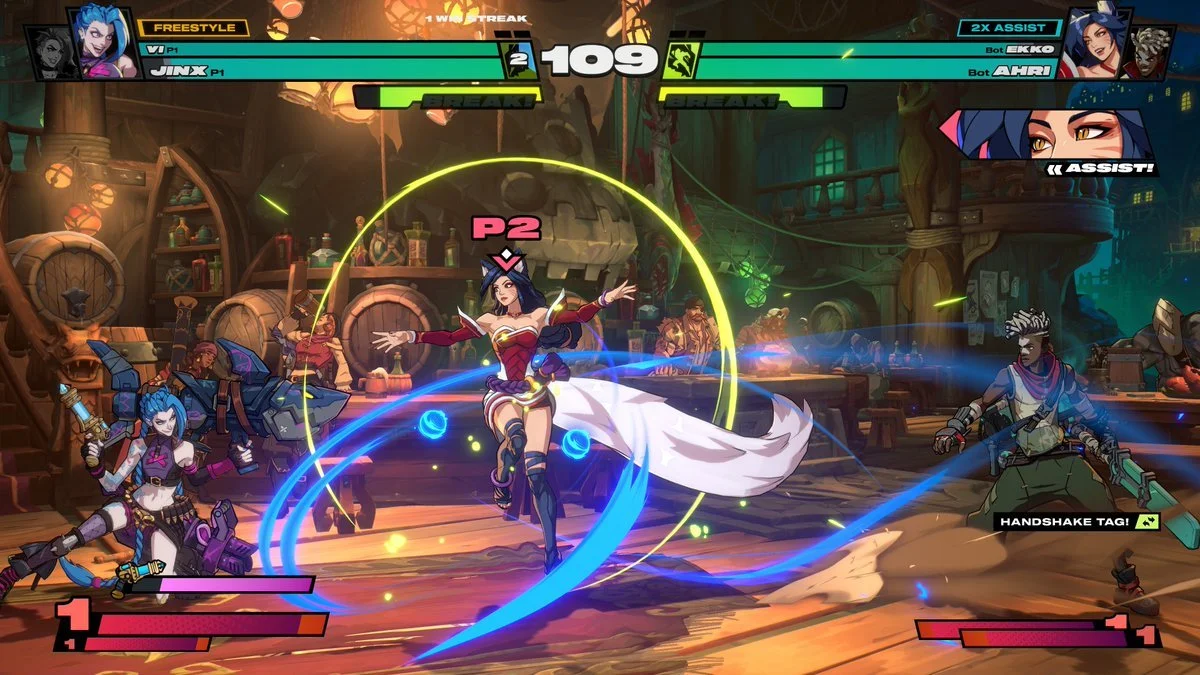
2XKO
Riot’s tag-team fighting game set in the world of League of Legends.
As a core combat designer, then Lead Champion Designer, I got very good at some difficult things.
Building characters that players fall in love with, by designing every facet toward a sharp player fantasy.
Designing mechanics as puzzle pieces that players can assemble in deep and expressive ways.
Adapting and elevating the essence of an IP without directly copying mechanics.
Crafting explosive combat with amazing game feel and intense power, yet tuning levers for balance.
Developing design frameworks that accelerate designer work and maintain cohesion.
Training and leading a mission-driven team of designers with enthusiasm and compassion.
Designing Ekko, my proudest solo design work. (Nominated for ‘Best Character’ at the EVO awards.)
Speaking to players authentically while building connection, excitement, and a clear narrative.
Identifying the true value of a game in the audience’s life, and designing to that.
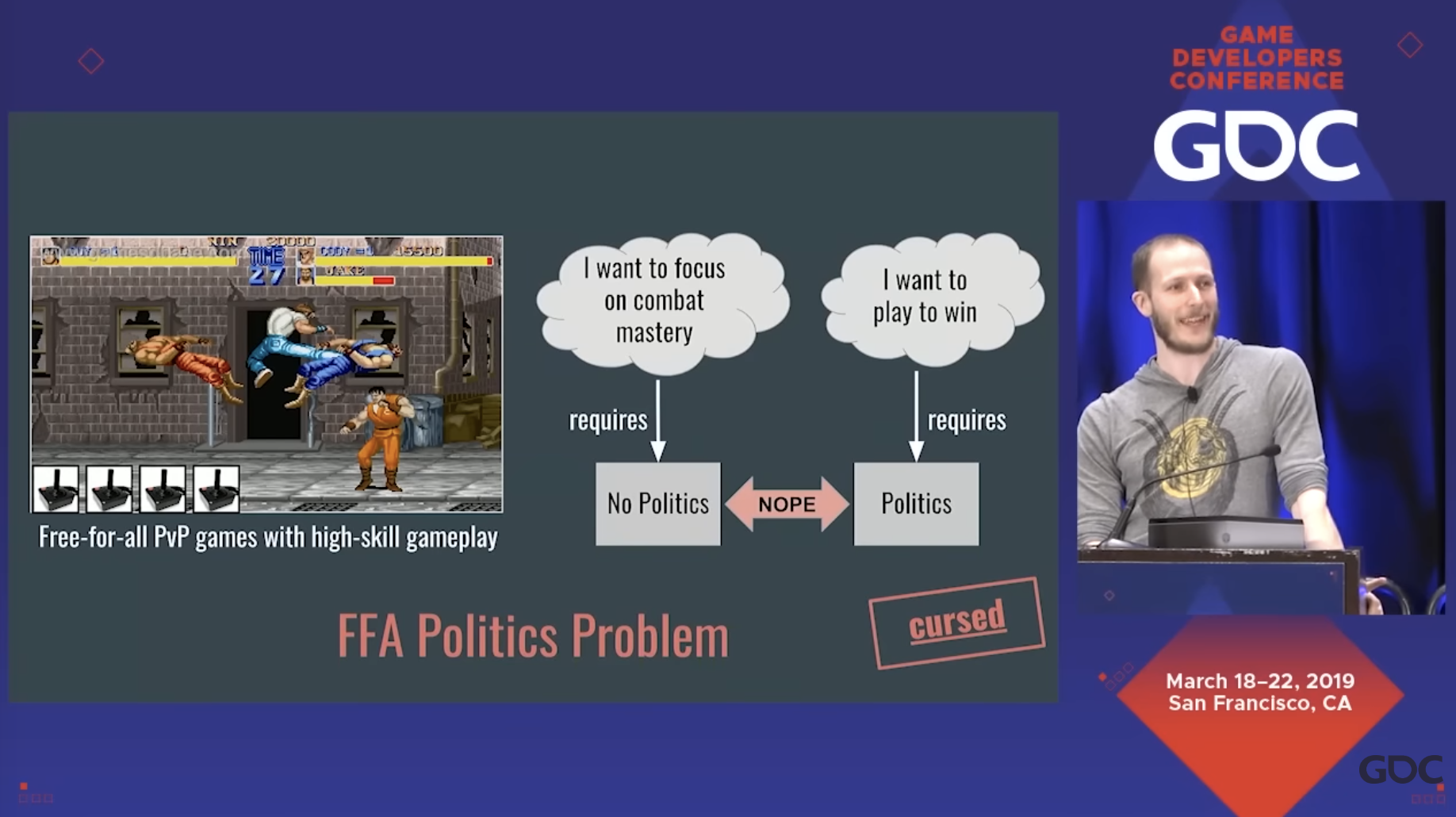
Cursed Problems in Game Design
Explains a core form of tension in the product vision and design of many games, causing them to inevitably fail. Teaches methods for identifying this tension, and resolving it through necessary compromises.
People love this one! It’s one of the most cited and lauded game design talks of all time. 🥰 Top 10 GDC talk, with 850k+ views.
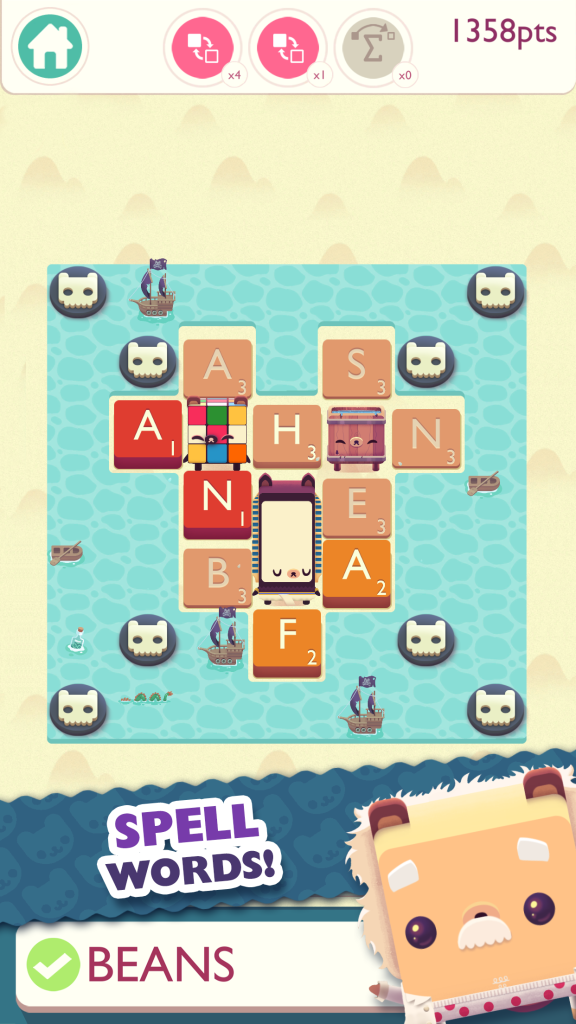
Alphabear & Alphabear 2
Spry Fox’s cute gacha word game sensation.
On Alphabear, I did balancing, data analysis, and systems design. On Alphabear 2, I was lead designer for all of prototyping & preproduction
The heart of my work was to thread a difficult needle: use the retention and monetization features of classic gacha games, while maintaining the coziness and values of Spry Fox. I researched and broke down the genre to understand the non-negotiable economic principles, then rebuilt a player-friendly progression & monetization loop on those foundations. I tuned this system using deep data analysis, and designed & built a robust progression simulator to assist.
Design Consulting & Analysis
In-house designer for Kongregate’s mobile publishing division. Provided design consultation and evaluation for 10+ published games (emphasizing systems and progression), as well as deep data analysis.
Design consultant on Radiant Entertainment’s Rising Thunder. Designed robust end-to-end progression systems. Included a novel (yet untested!) system to achieve much of the motivation of a pay-to-win system without impacting competitive integrity.
Design consultant on God of War (2018). Visited Sony Santa Monica to meet with designers, evaluate existing progression systems, and guide towards improvement opportunities, as well as a balancing framework.
PlayStation All-Stars Battle Royale
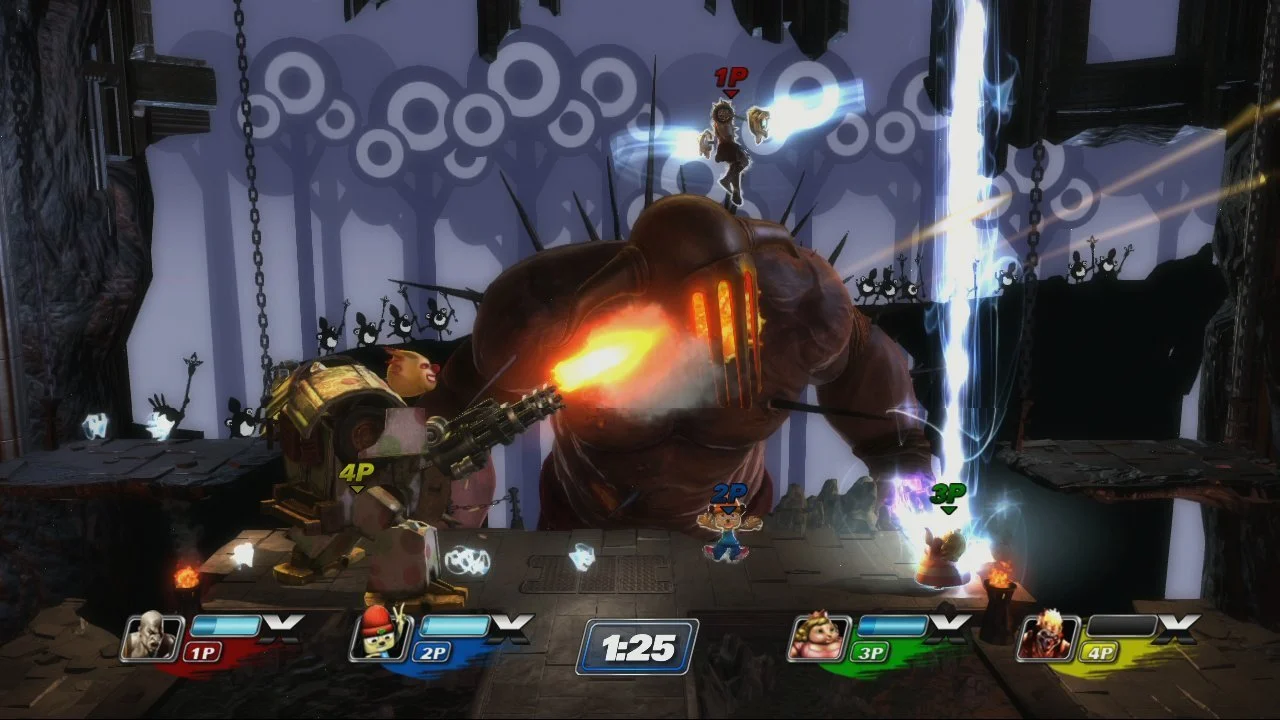
During my PhD, I interned then consulted on PSABR as a Technical Game Designer.
My role focused on analyzing granular player data to support game balancing. I developed novel visualizations for making sense of key gameplay moments, and skill-partitioning for finding balance signal in the noise. I worked directly with the game director post-launch to find unsurfaced balance issues, and dive deep into player concerns. Some of this work can be seen in my PhD thesis.
On the side, I designed the game’s competitive ranking system!
Metagame Balance
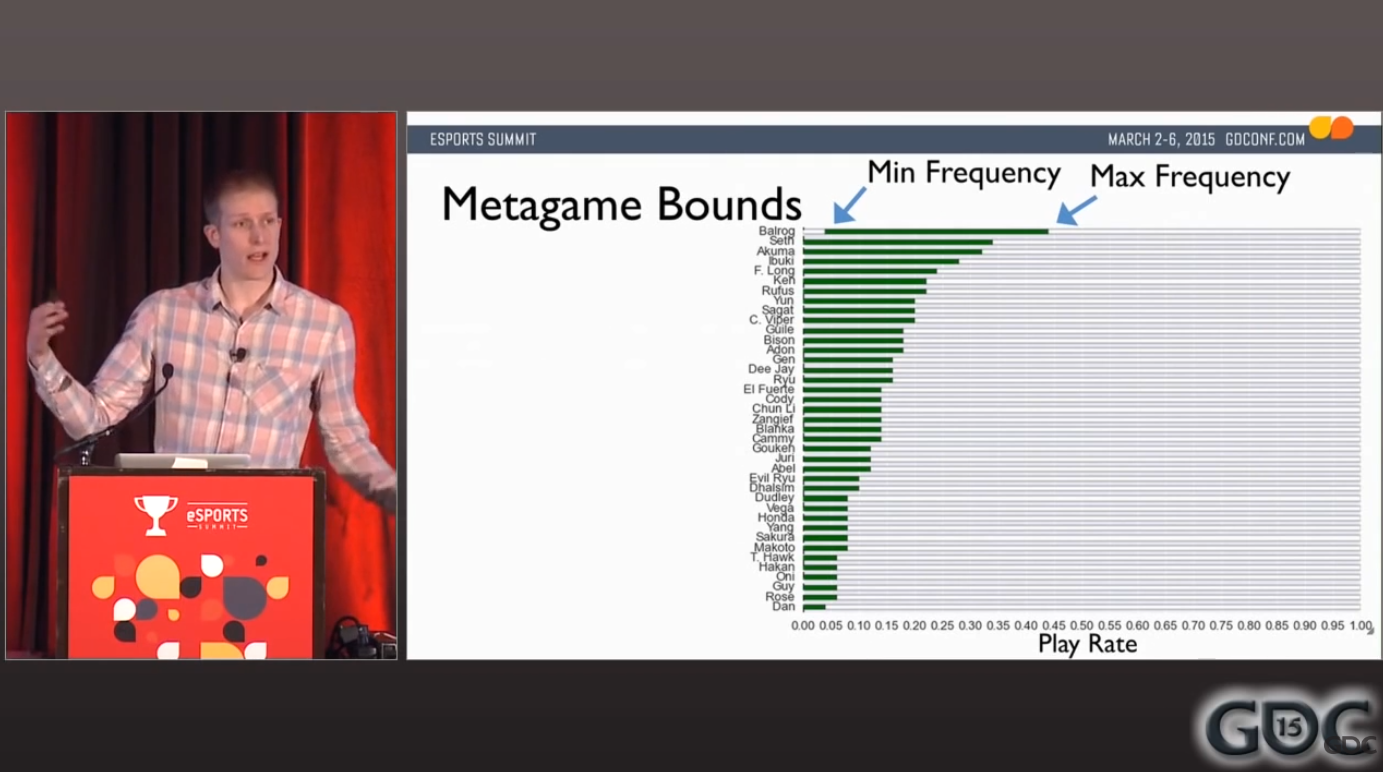
Presents a new way of thinking about asymmetric balance in competitive games.
I realized in grad school that tier lists don’t make much sense, since the effectiveness of a character/class/race/etc. is so dependent on the popularity of their bad matchups in the meta.
Using game theory, I found a more holistic way of expressing character power, by measuring their potential popularity in a stable meta. This talk explains the why and the how of this method, and actually runs it on PlayStation All-Stars to show its predictiveness.
Several developers have actually implemented this and used it to predict the meta of their PvP game. Nice!
Roguelike Development: Road Not Taken and Steambirds Alliance
Spry Fox’s roguelite adventure puzzle game, and roguelite mmo bullethell shooter.
I love roguelikes a whole lot - just like you, solid chance. At Spry Fox I got to do a mix of programming and design on two wonderful hybrid roguelites.
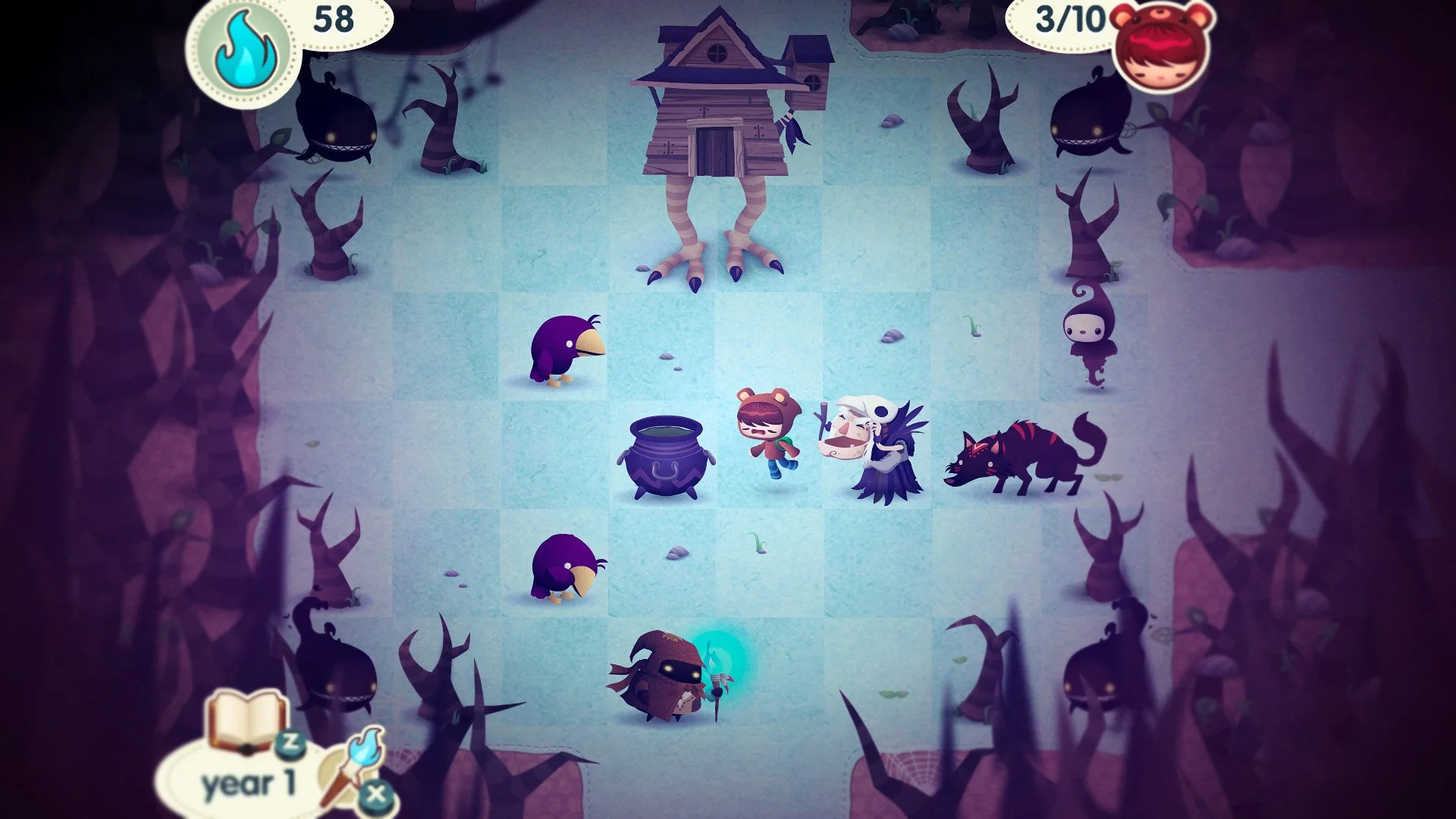
On Road Not Taken, I worked on the procedural level generation system, and got to design some encounters, such as the Baba Yaga boss level seen here! (This game is mystical and I still adore it.)
On Steambirds Alliance, I did a great deal of engineering: core combat, the tools, the network stack, the UI, again the procgen system. I also helped with core combat design, enemy design, and metagame systems.
PhD in Computational Game Balancing
A PhD dissertation at the University of Washington’s Computer Science & Engineering program.
When I was little, I said I wanted to be a mathematician, a ninja, or a game designer when I grew up. I got to the first one early. I shouldn’t mention the second. And I eventually made it to the third, by way of the first.
The first four years of my PhD were mostly in theoretical computer science, which is just math. I am a very good mathematician for a game designer, but not a very good mathematician for a mathematician, so I eventually transitioned to research on game design (and, at times, its connections to math).
I’m proud of my dissertation. I formulate a mathematically rigorous hypothesis for what game balance actually is, explore that formulation, then show various ways of measuring it (data analysis, simulation, game theory, etc.), to help designers understand their games better, thus make better games.
I also did a little research in a number of areas: computational biology, computational media, complexity theory, distributed systems, computer architecture, educational games, and game balancing, before I found my forever home as a practicing designer, not an academic.
